
Almost two years ago, Valve drastically changed Dota 2 by adding two new features in Gameplay Update 7.36: Facets and Innate abilities. While Innates were passive abilities, something that helped solidify hero identities (and often times by liberating their other abilities from the duty of being the passive ability), Facets were something different. A binary (and sometimes trinary) choice that altered the way a Hero functioned.
And then 21 months later, they were gone. With the release of 7.41, Facets were removed from Dota 2. Were facets a failure? Or just a step on transforming heroes into the more interesting and developed concepts they have today?
Let’s take a fond look back at Facets, and try and come to a verdict on whether they were a failed experiment, or a perfect way to expand the ever-changing game of Dota 2. And while we’re at it, speculate on just why Valve removed them in the first place.
What were Facets for?
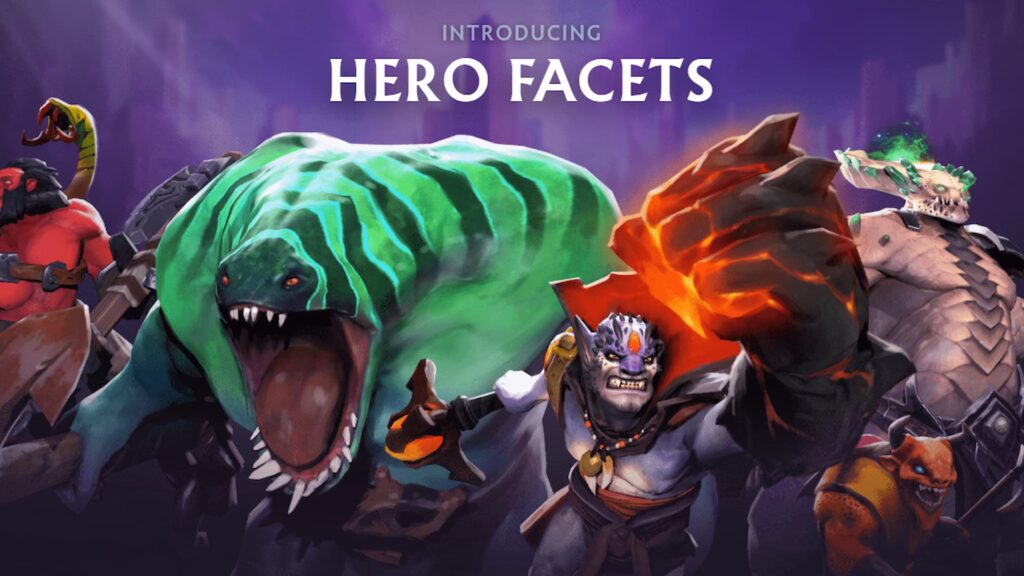
Before we figure out why they’re gone, let’s look at the reasons Facets were added, or at least their intended purpose. For that, let’s look first at what Valve’s stated design reasoning for them was, as per the patch notes.
“Facets are a hero customization choice that provide the ability to better align the playstyle of a hero with a specific match or player preference. Facets are specific to heroes: Each hero has at least two Facets, and every player can choose the Facet they prefer during strategy time at the beginning of each match.”
This description hints at two purposes for Facets: Individual play-style customization, or ‘specific match’ style changes, as in changing the way a hero plays to avoid a bad situation in a match. The two primary functions of Facets then were to alter playstyle either wholesale, or as a response to being counterpicked.
That second option, the idea that heroes would be found in a bad matchup and then change their style to be able to avoid it was perhaps the most novel idea, but unfortunately it was almost entirely underutilized. Instead, the practical use of Facets was to pick the strongest one and ignore the other.
This was probably best exemplified by Faceless Void. The melee carry hero’s Facets changed his ultimate ability between Chronosphere and Time Zone. While Chrono was a hard CC that locked everyone down apart from Void, even allies, Time Zone sped up all allies and slowed all enemies. For the most part, no one used the Time Zone, as it was seen as a suboptimal choice. Until eventually, sadly at the tail end of the lifespan of Facets, support Faceless Void, who now used Time Zone and Time Dilation as an engage tool became a viable option.
In theory, this later usage of swapping Void to support could have been a way to avoid counters. Hard lane like Beastmaster? Just play Faceless Void support and pick another carry.
There were many other examples, with Facets in theory supporting an alternative playstyle but, in practice, rarely getting used. Underlord’s Abyssal Horde facet, which summoned creeps from portals, could have been used to make him a potent split pusher. But it was trumped by the Demon’s Reach Facet just being plain better for farming. Removing the Facet also killed a more carry-focused version of Underlord.
Were Facets a test?
The other element of Facets that some people have hypothesised about is that Facets were an elaborate data-gathering exercise. Facet usage helped inform Valve about how people actually want to play Dota 2 heroes.
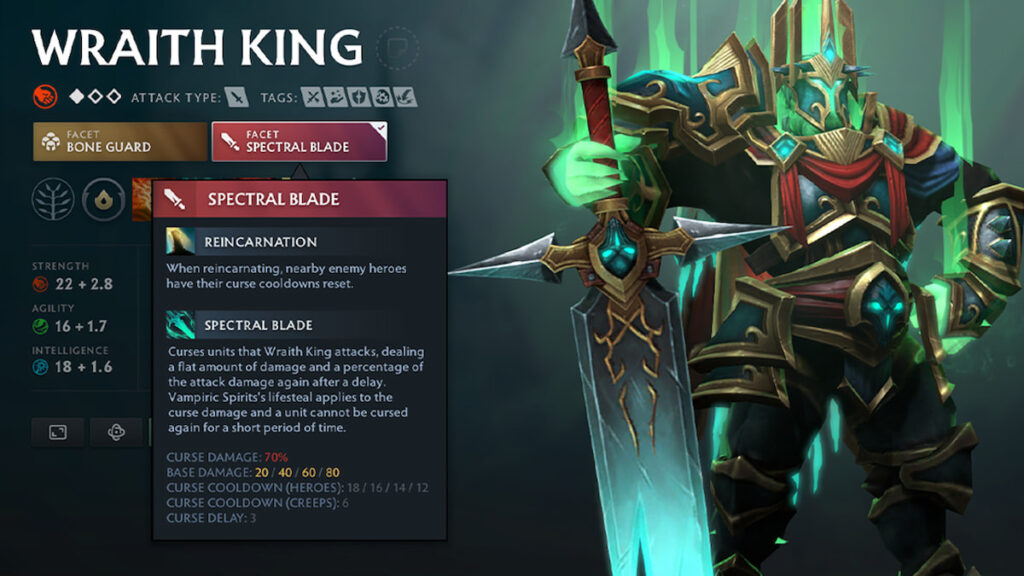
For instance, it made it clear that heroes like Shadow Shaman and Nyx Assassin would benefit from incorporating multiple parts of their Facets into their base gameplay. For Wraith King players, the skeletons were clearly a core part of his kit that losing via Facet wasn’t worth for most players.
Meanwhile some heroes, such as Tidehunter and Sand King, were shown to need a little extra in terms of abilities or mechanics to expand their playstyle to be more engaging.
Facets, then, could have just been a mass experiment. A way of surveying the entire playerbase. Some have gone as far as to suggest that Facets were always going to be temporary, and their inclusion was just to test out hundreds of crazy ideas while giving players the option of opting out via the pre-match choice.
After all, Valve does experiment with Dota a lot. And it removes ‘failed’ experiments as often as it adds new ones: Some may never forget the abomination of Blinding Dart Riki with Meteor Hammer.
But if this was just an experiment, did it succeed?
Did Facets succeed?
On their stated goal, Facets very much failed. The idea of giving players an ability to switch playstyles was a great idea. But in practice, most just opted to pick the most successful option and ignore the others.
There’s a lot of reasons for this. While some have suggested that it was just an extra layer of unnecessary complexity, I think Facets were instead a result of decision fatigue. In Dota 2 you have to choose your role. Your hero. The items. The strategies. You have to make a decision every single second in-game. Facets were just one too far, and not meaningful enough.
On the second count, though, the more theoretical idea behind Facets as a testing ground for new ideas, Valve very much succeeded. Some of the most interesting and best new additions to the game came from Facets, and many heroes are now in a far better state than they ever were before the addition of Innates and Facets.
Valve almost always improves Dota 2 when they make these kinds of drastic changes. While we sometimes take it for granted, especially when we see other live-service games getting constant updates, etc. those other titles rarely have huge sweeping changes like Facets. And I for one will miss them a lot.