
Support is often misunderstood as the least impactful role in League of Legends. You’re not racking up kills or leading the damage charts, making it feel like you’re simply along for the ride. In reality, though, League of Legends supports are the ones dictating the game, setting up vision, protecting carries, and controlling tempo.
Table of Contents
To help you get started, we’ll break down 10 beginner tips to master the support role in League of Legends, from laning phase through to the late game. By the end, you’ll have a solid playbook for playing support confidently beyond the bot lane.
Why Playing Support Is Ideal For Beginners
It’s not uncommon for new players to feel intimidated by the support role. The game has a steep learning curve, and many players think they’ll just feed the enemy team. On the contrary, support is actually one of the easiest and least stressful roles in League of Legends, especially for beginners.
Without the pressure of last-hitting or mastering complex mechanics, your core purpose as a support is to protect and enable your team. Plus, since you’re not the primary win condition, mistakes are far less punishing, giving you more room to learn while still contributing meaningfully in your matches.
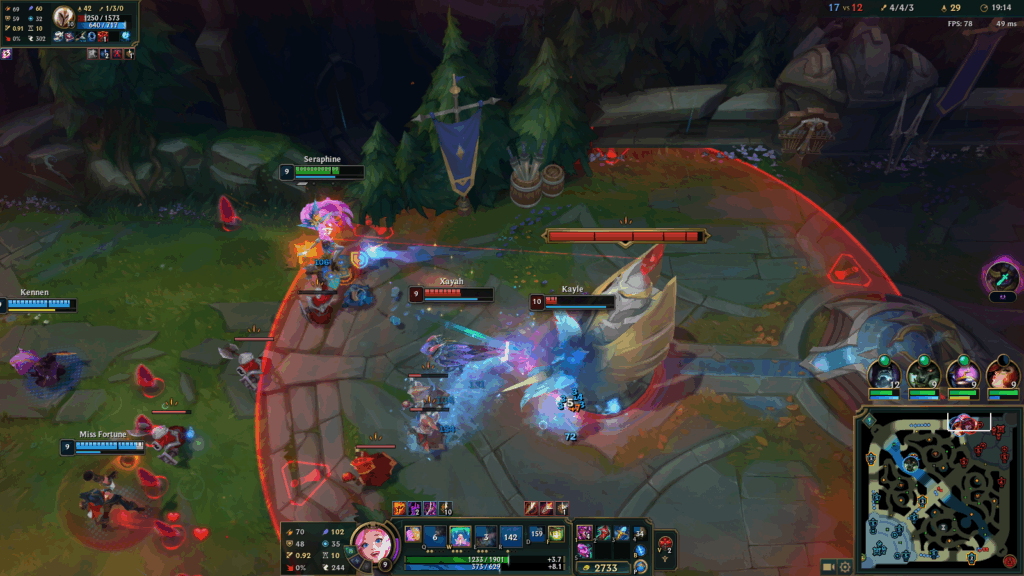
Supports don’t carry through damage, but through impact. In the lane, that means controlling bushes to apply pressure, poking enemies to deny farm, managing wave control, and protecting your carry during trades. Later, your priorities shift toward controlling vision around key objectives and roaming to exert pressure on other parts of the map.
Unlike bot laners like Ashe or Smolder, support item builds aren’t gold-dependent, as the role is designed almost entirely around utility (e.g., vision, shielding, movement, damage reduction, etc.). This lets you have an impact even with a limited budget, influencing the game through decisions rather than gold leads.
At its core, the support role in League of Legends is all about helping your team, especially your attack damage carry (ADC). It’s definitely not the flashiest role, and you probably won’t top the scoreboard in kills, but your actions directly dictate fights and often decide the outcome of a match.
10 Essential Tips For Support Beginners In League Of Legends
With the groundwork laid down, let’s take a look at 10 essential tips to help you have a real impact as a support player in League of Legends.
#1. Prioritize Vision Control
Vision control is the single most important responsibility for a support.
Wards allow you to control vision, and they provide both defensive safety and offensive opportunities. While they serve as a safety mechanism against ganks, wards also provide valuable information, from tracking enemy movements to spotting windows for pick-offs or objectives. Many new League of Legends players make the mistake of autopiloting their ward placement.
Instead of randomly dropping wards, place them with purpose. For example, plant a river ward after crashing a wave to protect your ADC while the wave rebounds, or use that same window to ward jungle camps like raptors or krugs to track the enemy jungler and set up future plays. Also, make a habit of buying Control Wards whenever you can afford them.
Support builds aren’t as reliant on gold, allowing you to invest more into vision than most roles. While you’re at it, complete the support role quest (specifically, World Atlas → Runic Compass → Bounty of Worlds) to unlock extra Stealth Ward charges and maximize warding capacity for your team.
#2. Master Your Support Item
World Atlas is a universal support item in League of Legends that allows you to earn gold and progress your role quest. The item is automatically assigned whenever you queue as Support and generates Shared Riches charges. These can be used to either:
- (i) execute low-health minions to share gold with nearby allies, or
- (ii) damage enemy champions and turrets to earn gold through trading.
In both cases, you should use item charges with intent. For example, executing minions can help your ADC secure difficult CS and maintain wave control, while poking and trading with enemy champions can keep lane pressure high and convert trades for gold. By holding max charges, you’re effectively wasting gold and slowing your role quest progression, so don’t forget to use them.
#3. Lane Positioning And Bush Control
Practicing good positioning and bush control as a support won’t just keep you safe but can even win you the lane. Many low MMR players have bad positioning habits. For example, they might stand too far behind the ADC or retreat whenever the enemy walks up to them. Doing this not only gives up space but also allows the enemy carry to last-hit minions uncontested, costing you the lane without even fighting.
Instead, position parallel or slightly ahead of your ADC without exposing them, constantly mirroring and adjusting to enemy movements. At the same time, step forward to punish last-hits. That way, you keep lane pressure and force the enemy ADC to take damage from your autos or abilities. You can also use bush control to your advantage. By denying vision of your position, you become a constant threat the opposition will have to track, forcing them to either waste abilities to reveal you or risk walking into a bad trade.
#4. Deny Enemy Minions And Poke Effectively
As a support, you should constantly try to deny the enemy bot laner minions by poking and zoning them out of the lane. You want to force them to lose gold, XP, and health. Over time, this will create a deficit that, if leveraged, can give your ADC the edge they need to (hopefully) snowball into the late game.
The main way to deny minions is through positioning and pressure. By standing aggressively between the enemy ADC and the wave, you make every last hit risky. The enemy either loses CS or gets punished with abilities or autos. This forces a trade-off that slowly starves the enemy out of the game.
#5. Know Your Champion’s Specific Role
Support champions in LOL typically fall into three roles: engage, peel, and poke, and knowing which one you’re playing is crucial to the decisions you make. Engage supports like Leona or Nautilus are both designed to initiate fights. They offer hard engage with stun chains or de-positioning tools to snag pick-offs, usually around level spikes or enemy misplays.
Peel supports (enchanters) like Janna, Nami, or Lulu are built to protect and enable teammates. Instead of forcing fights, they provide crowd control (e.g., stuns, roots, slows, silences, knockbacks, etc.) alongside healing or shielding to keep vulnerable allies alive and to disengage enemy threats. Poke supports like Zyra and Lux are focused on applying constant pressure and damage, using their long-range autos and spell nukes to punish the enemy ADC when they go for minions and basically force them out of lane. If played correctly, they are a nuisance for the enemy to deal with.
#6. Communicate With Pings
As a support player, you’ll not only be responsible for having constant map awareness but also for communicating key information to your team.
You can do this using pings to warn allies when enemies are missing, signal imminent danger, or simply to indicate that you want to engage. This becomes especially important when you’re roaming, contesting vision, or are preparing to take objectives.
You’d be pleasantly surprised by how powerful a simple ping can be to prevent avoidable deaths or help teammates follow up faster.
#7. Let Your ADC Focus On Farming
You might be tempted, but don’t take minion last-hits from your ADC, especially not if they’re guaranteed to hit them. The main issue is gold distribution.
ADCs are heavily gold-dependent and every CS brings them closer to hitting their power spike. When a support takes the last hit, it slows their item progression and damage. It can also mess with wave control by pushing minions, breaking freezes, or creating unsafe positions that leave your ADC exposed. The only time it’s appropriate to take CS is if your ADC is dead, out of the lane, or guaranteed to miss the last-hit. Outside of these conditions, taking minion kills will likely grief your teammate and get you reported.
Note: Since Patch 26.7 removed the support farming gold penalty, you can now safely take more CS when needed without incurring any personal gold loss.
#8. Purposeful Roaming
Roaming is one of the most impactful things you can do as a support, but only when executed at the right time. As a general rule, only leave the bot lane after crashing the wave (i.e., pushing it into the enemy turret) or if your ADC recalls to the fountain. That way, you’re not leaving your turret vulnerable to attacks or your carry at risk of dying or missing last hits.
To help you decide if roaming is the right move, ask yourself: Can your ADC farm safely without you, and can you roam impactfully before the wave rebounds? If not, then it’s probably better to stay in the lane. A good roamer knows when to create pressure elsewhere without sacrificing their lane. In addition to timing, pathing also matters.
For example, instead of walking back bot, consider pathing toward mid to either help the midlaner, sync up with the jungler, or rotate to take objectives or fights. The worst outcome is that you simply go back to helping your ADC in the bot lane.
#9. Peel For Carries In Teamfights
As a support, you shouldn’t default to engaging or playing too aggressively. Instead, your primary focus should be to protect your team. Peeling becomes a stronger priority when the enemy team has champions that can dive your carries. For example, if there’s a fed assassin or bruiser targeting your backline, your role should be to hold your abilities to protect your ADC or midlaner, acting as a barrier between them and the enemy.
It’s all about timing. Rather than blowing your spells whenever they’re off cooldown, save them for moments that actually matter. You might not deal tons of damage, but the crowd control you provide will ensure your carries stay alive long enough for them to do their job.
#10. Track Enemy Cooldowns
Tracking cooldowns is an important skill that separates good supports in League from great ones. It’s also among the easiest ways to help you make better decisions. Every ability creates a window of strength or vulnerability. For example, if an opponent has already used an important Summoner Spell like Flash, it means they’re temporarily weaker. This opening can be exploited to pressure them harder or attempt a takedown.
By contrast, if your abilities are down, you should play more defensively so you have the utility needed to protect your carry when they’re actually threatened. By tracking enemy cooldowns, you can take fights with greater confidence and avoid unnecessary deaths. Once you’ve mastered these fundamentals as a support, you can move on to expert coaching for further improvement. And remember: supports are expendable, meaning you can risk yourself to place deep wards or scout dangerous areas without griefing your team.
How To Succeed As A Support In The Early Game
The “early game” comprises the first 10-15 minutes and is all about establishing early advantages in lane, long before major teamfights or rotations begin. It’s also the time you either set a strong foundation or quietly fall behind. Here are a few additional tips to help you succeed as a support in the early game.
Play Around Your ADC
While it may feel like glorified babysitting, playing around your ADC enables your team’s primary source of damage. After all, you’re NOT the solo carry.
Most ADCs are weak early on, so if you’re not positioning with them to trade or zone the enemy, they can’t farm safely. This hurts their ability to scale into the late game. As a result, you should always try to match their position in the lane, control bushes and vision, and pressure the enemy carry whenever they try to farm. Many pros use triangular posturing to create lane pressure.
Imagine a triangle. You are one point, and your ADC is another. The enemy ADC or support is the third. Don’t stand directly on top of your ADC, but slightly to the side to create an angle. By doing this, you can harass the enemy while they farm or turn on the enemy support if they step forward.
Good positioning makes it awkward for enemies to respond while also building lane presence. If you stand too far back, you lose lane control, which gives the enemy confidence to play more aggressively. On the other hand, be mindful not to overextend, especially not when you crash the wave into the enemy turret. If you’re not careful, you or your ADC will be more vulnerable to ganks.
Level Up Your Support Item
In addition to protecting your ADC, you should also extract the most value from your support item. The World Atlas is a universal support item that generates Stealth Ward charges over time. Use them to execute minions or trade with enemies to generate gold and complete your support role quest faster.
After hitting 400 gold, World Atlas upgrades into Runic Compass, unlocking better stats and three ward charges. At 800 gold, it upgrades again into Bounty of Worlds, granting four wards and your final support item upgrade. Depending on the upgrade, you can get extra damage (Bloodsong, Zaz’Zak’s Realmspike), survivability (Celestial Opposition), mobility (Solstice Sleigh), or stronger shielding and healing (Dream Maker) for free.
Hitting these breakpoints early gives you a huge tempo advantage, as you’ll benefit from more vision and map control. Always use your charges efficiently and avoid holding max stats, as it will only delay your progression.
Ward With Purpose
Many support players ward too early and without purpose, before it can provide any meaningful value. For example, they might instinctively drop a ward right after the first or second wave. At this point, the jungler is likely still clearing camps, meaning the ward expires before it does anything useful. Instead, hold it until around 2:10–2:30 (after the third or fourth wave).
This timing aligns with scuttle spawn and the first real jungle interactions, allowing you to track the enemy jungler’s pathing and give your team better information for potential fights that might break out around river control. Additionally, prioritize the pixel brush over the tri-bush when possible, as it provides sight of the river, jungle entrances, and objective pits.
Lane bushes are another way to play around with vision. Simply sitting in the bush denies vision and creates pressure, as the enemy doesn’t know if you’re about to engage or poke, forcing them to play defensively. You can also use it aggressively to set up surprise ganks or dives when the enemy least expects it.
Finally, try to sync ward placements to the wave state. After crashing the wave, you’ll have a brief window to ward off the river or jungle. However, if the wave is pushing toward you, stick with your ADC. As the game progresses, you can shift to warding during roam timers and around objective spawns.
Making Map Impact: Roaming And Vision As Support
Your impact as a support isn’t limited to only the bot lane.
Roaming allows you to apply pressure elsewhere on Summoner’s Rift, either by helping adjacent lanes lock down kills or by setting up vision before fights break out. In both cases, it provides your team with an advantage. Before you do this, though, you should ask yourself the following questions:
- Is the wave pushed?
- Is my ADC safe or recalling?
- Do I have enough health and mana to have an impact elsewhere?
- Do I know the enemy jungler’s location?
- Is an objective spawning soon?
If the answer isn’t overwhelmingly yes, it’s likely not a good time to roam. Leaving the lane at the wrong time puts your ADC at risk, making the trade-off not worth it.
If you do decide to roam, always ping your carry. That way, your ADC knows they’re alone and will play more defensively. Also, path through areas that aren’t likely to be warded. Doing this lets you gank the midlane, assist the jungler, or place deep wards without being spotted.
Vision is what makes roaming successful. If the enemy team does not expect you, it gives you the upper hand in a skirmish. So, use Stealth Ward charges and Control Wards to light up paths, and remember to use Oracle Lens to deny enemy vision before fights or when contesting objectives.
If you’re ahead, try to place deep wards in the enemy jungle for pick-offs. Even if your roam doesn’t end with a kill, your presence creates pressure and encourages better coordination from your team. If you’re behind, focus on defensive wards to give your teammates space to farm and close the gap safely.
League Of Legends Support: Frequently Asked Questions (FAQ)
Confused about something? These frequently asked questions (FAQ) should clear up any remaining doubts you might have about supporting in League of Legends.
Do I Need To Farm Or Last-Hit Minions As Support?
No. Since your gold comes from the support item quest, farming minions is not necessary. Only last-hit minions if your item allows you to execute them or if your ADC would otherwise miss them.
When Should I Buy Control Wards?
Buy Control Wards as often as you can. Vision control is a core part of your role as a support, so aim to have at least one Control Ward on the map at all times, especially around key objectives like Dragons or Rift Herald.
How Do I Know When To Roam?
The only time you should roam as a support is if both your turret and ADC aren’t under threat. That usually means you’ve crashed the wave into the enemy tower, the wave is rebounding, or your ADC has either recalled or can farm safely without getting killed.
How Do I Choose Which Support Item To Start With?
All supports start with the World Atlas, which generates charges over time. These can be used to execute minions or damage enemy champions or structures to earn gold. By completing the support quest, it will automatically upgrade into Runic Compass and Bounty of Worlds.
What Is My Main Focus As A Support?
As a support, your main focus is to protect and enable your team. This means buffing allies, controlling vision, peeling enemies, setting up plays, and applying pressure, all without relying on gold or resources.
My Champion Doesn’t Heal Or Shield, How Do I Help?
Not all supports in League of Legends help through healing or shielding. You can also help your team by applying pressure or disrupting enemy setups with crowd control. This includes locking down enemies with a stun or peeling a diver engaging on your carry.
When Should I Upgrade To Oracle Lens?
You should switch to Oracle Lens only once the laning phase opens and vision becomes contested. This usually happens after your first item upgrade or around key objective timings. When activated, you can detect and disable enemy vision around you.
How Do I Get Better At Support Quickly?
Master the fundamentals, like positioning, vision, and rotations. For example, simply stepping forward when the enemy ADC goes for a last-hit, placing wards before objectives spawn, or roaming at the right time will immediately make you more effective in your matches.
Always practice Responsible Gambling and check out our latest promo offers and boosts. T&Cs apply. 18+ to play.